Robotic Needle Guidance with Multi sensing Fusion for Sub-millimetre Accuracy
Published:
Project overview
Conventional image-guided needle insertion with US/CT/MRI still relies heavily on operator interpretation, which can lead to vessel puncture, pneumothorax, or nerve injury—particularly for less-experienced users. This project builds an active guidance system that fuses bioimpedance (BIOZ) sensing, robotic haptic feedback, and ultrasound signal processing to characterise tissue in real time and provide sub-millimetre guidance during deep insertions.
Key research thrusts
- Electrodes and front-end design: minimise impedance drift and expand the effective sensitivity zone beyond the immediate electrode surface.
- Real-time tissue classification: high-rate, robust BIOZ acquisition and rapid calibration for continuous estimation of local tissue states.
- Sensor fusion with ultrasound: combine BIOZ features with ultrasound cues to infer target proximity and safe trajectories.
- Closed-loop robotic guidance: force/feedback-enabled motion control for precise tip placement and stable advancement.
- Workflow integration: sterile form-factor and compatibility with standard instruments and clinical practice.
Early validation (CVC example)
- 100% venous entry success rate along the z-axis.
- 86.7% central positioning accuracy.
- Sub-millimetre precision across 24 trials with 0.66 mm RMS error.
- Real-time feedback at >100 Hz sampling.
Hardware Recording
The project involved progressive hardware development from single-channel to multi-channel bioimpedance measurement systems:
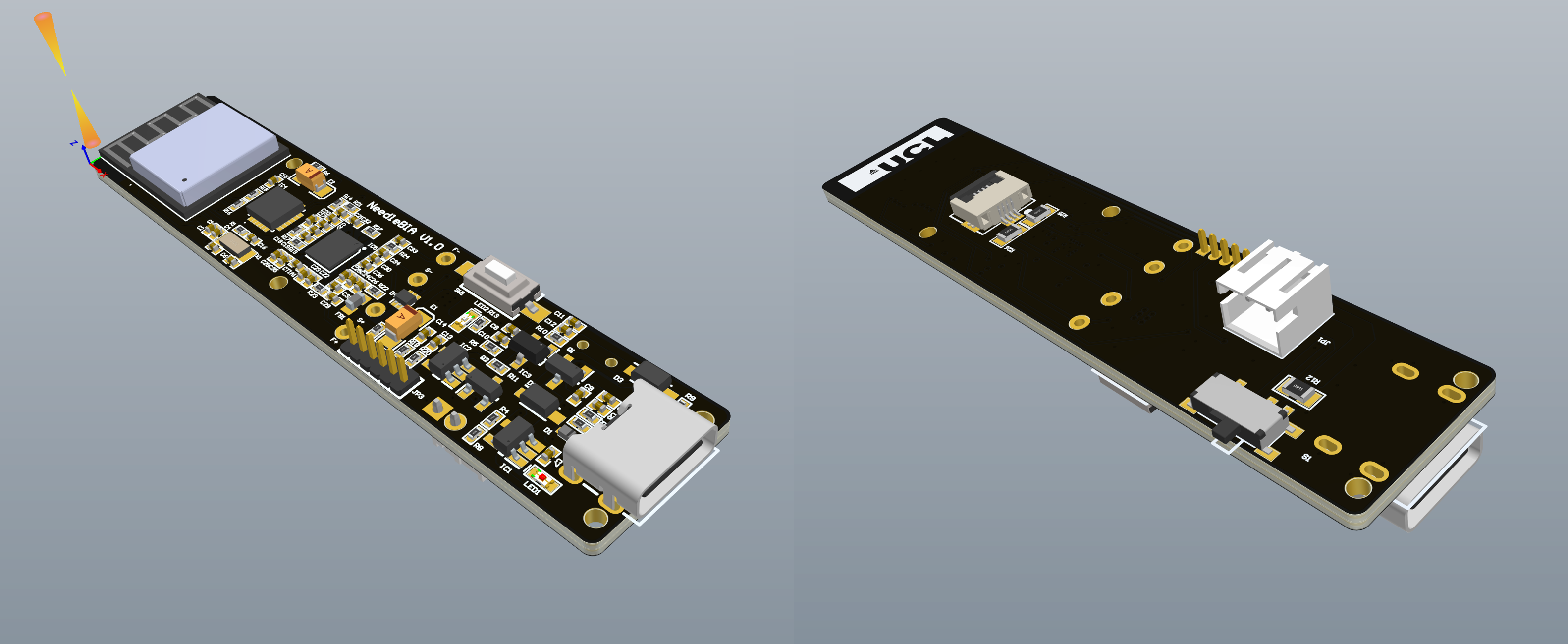
Version 1: Four-wire Single Channel
Initial prototype implementing standard four-wire bioimpedance measurement with dedicated excitation and sensing paths for baseline tissue characterization.
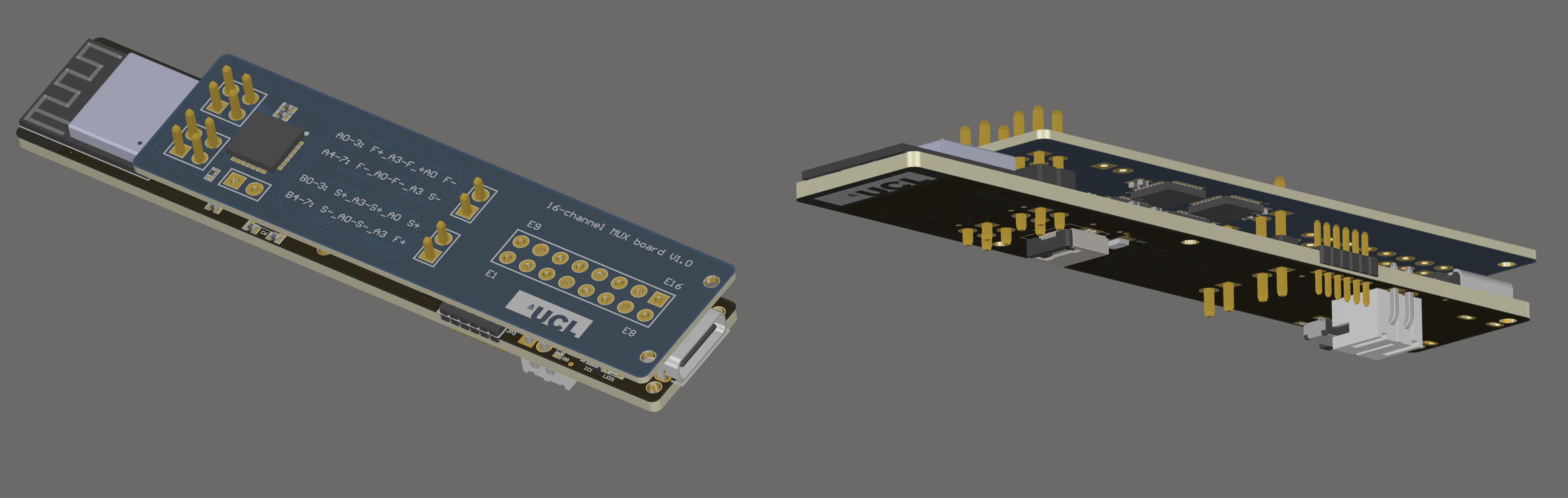
Version 2: 16-Channel Multiplexed System
Advanced multi-channel design enabling independent channel selection across 16 measurement points, allowing for spatial bioimpedance mapping and enhanced tissue discrimination.
Impact
The platform establishes the foundation for next-generation minimally invasive procedures. It targets CVC, targeted drug delivery, biopsy guidance, and neuro-interventions, aiming to reduce workflow complexity while improving patient safety and outcomes.